Shoreline Cleanup: What 807.6kg of Trash Looks Like Up Close
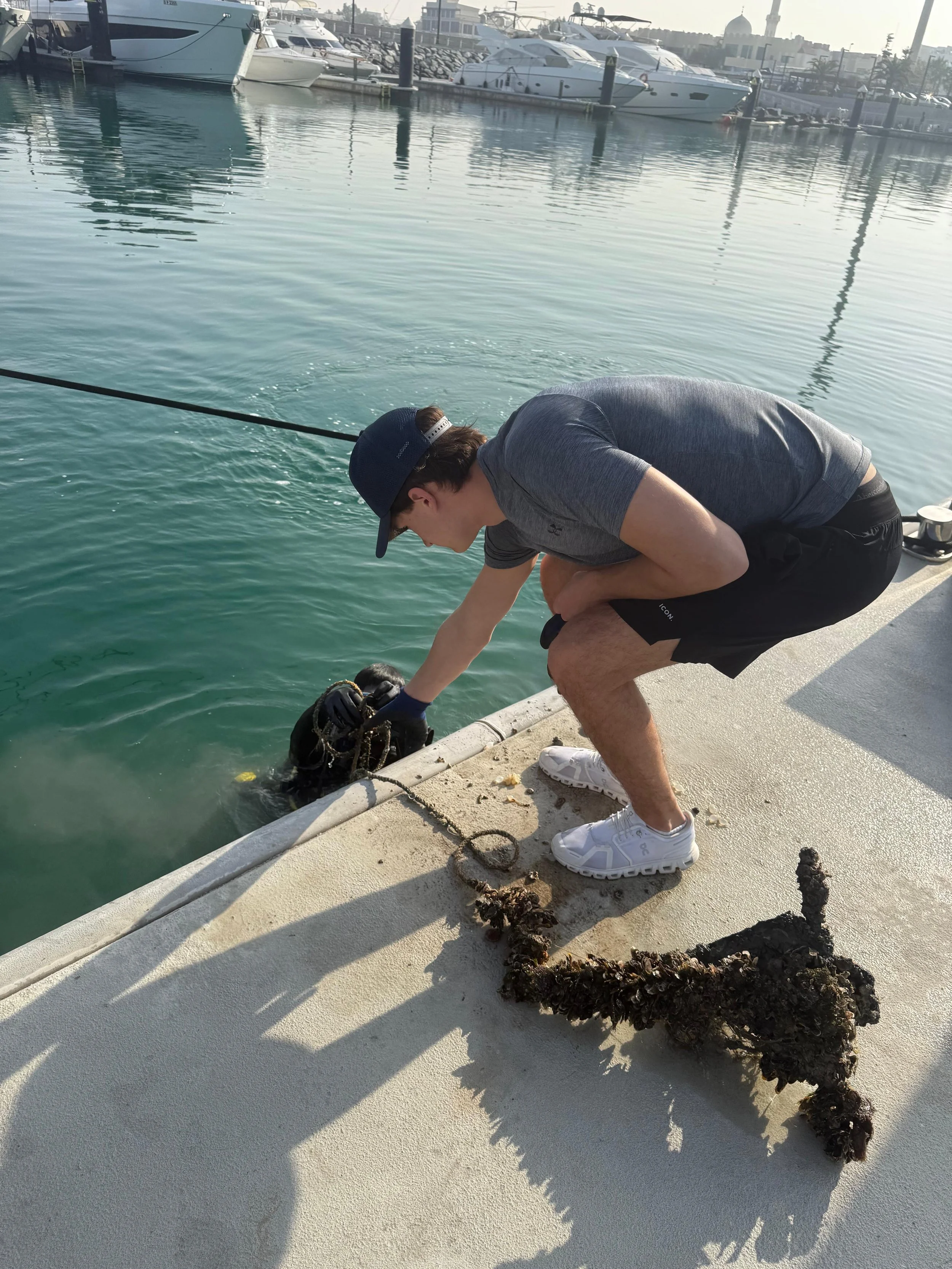
On February 7th, I joined an underwater and shoreline clean-up with the Emirates Diving Association at D-Marin Marsa Al Arab.
I went into it thinking I had a pretty good idea of what to expect. Living on Palm Jumeirah, I see plastic wash up on the beach all the time: bottle caps, bits of netting, pieces of bags. It’s easy to notice, and just as easy to walk past. But seeing it collected in one place was something a completely different experience, one I didn’t expect.
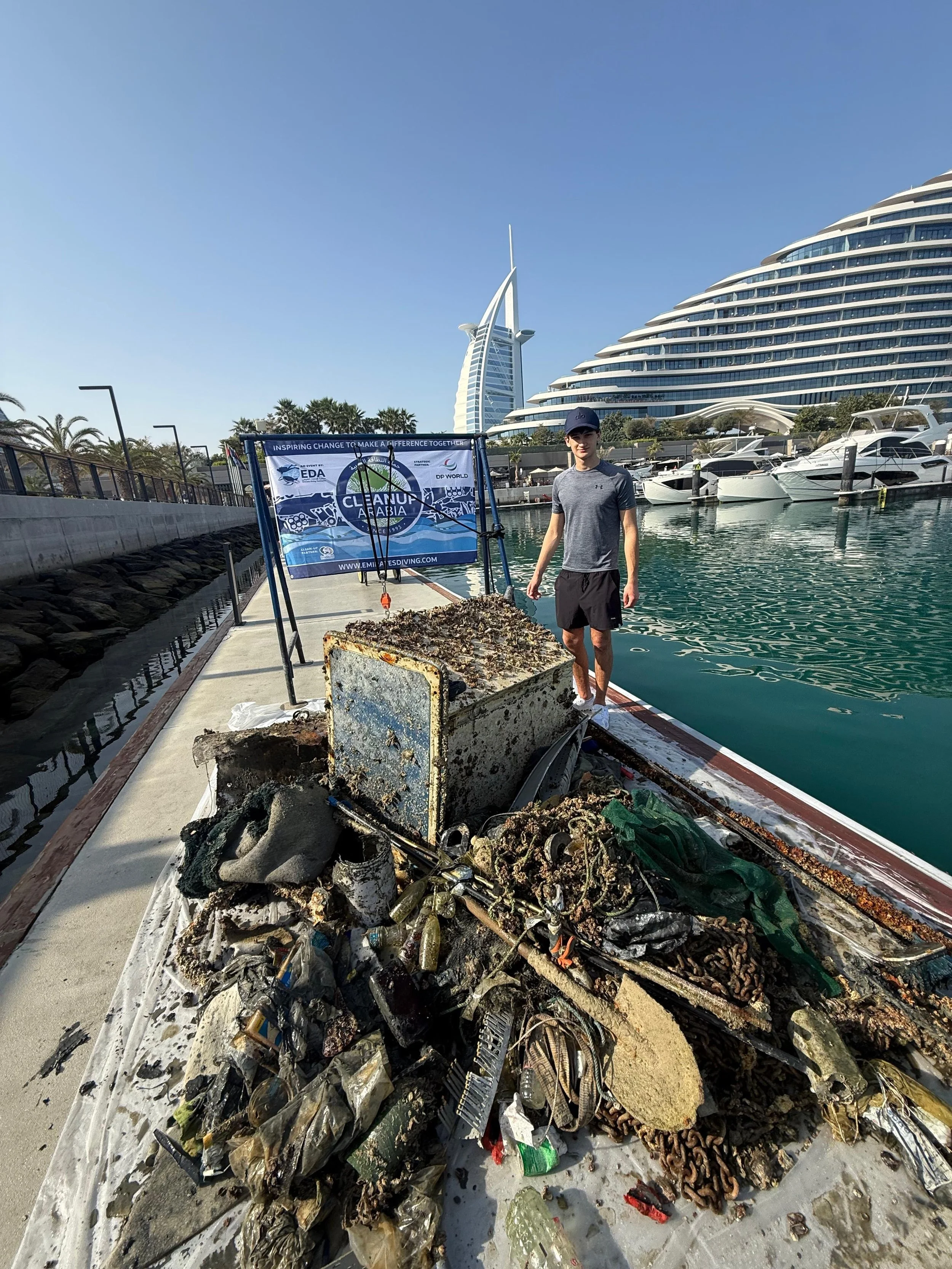
By the end of the clean-up, the team had removed 807.6 kilograms of waste from a single dive site. That number didn’t really register at first until I started helping sort and move it.
There were the expected things, like plastic bottles, cups, bags, but also things that made you stop for a second: a 270kg lorry tire, heavy chains, construction debris, even things like pillows and towels. It wasn’t just litter. It was evidence of how much ends up in the water without us really thinking about it.
I wasn’t diving that day, instead I was part of the surface support team, but that actually gave me a different perspective. I watched divers bring things up piece by piece, and I realized how much effort it takes to undo something as simple as throwing something away in the wrong place.
From Awareness to Action
Before this, I had already reached out to EDA because I wanted to do something about what I was seeing on the Palm. The beaches are cleaned regularly, but smaller debris still builds up—especially in residential areas where there aren’t always bins nearby.
What I’ve started to realize is that large clean-up events are only one part of the solution.
The bigger opportunity is consistency.
It’s the idea that if people walking the beach every day each picked up a few pieces of trash—and had somewhere to put it—it wouldn’t build up in the first place.
That’s something I’m now thinking about more seriously:
How do you turn something like this from a one-day event into something that’s just… normal?
Why This Matters (Beyond One Day)
This experience made the problem feel a lot more real—but it also made the solution feel more possible.
Because 807.6kg didn’t appear overnight.
And it doesn’t have to keep happening either.
What stood out most wasn’t just the amount of waste—it was how many people showed up to do something about it. Divers, organizers, volunteers—everyone working together to fix a problem that technically belongs to all of us.
That’s the part I want to build on.
Not just reacting to the problem, but creating something repeatable. Something local. Something that people can be part of without needing a full-scale event.
This is just a starting point, but it’s one that I’m definitely planning to take further.
What’s Next
I’m continuing to work with and learn from organizations like the Emirates Diving Association, while also exploring ways to:
Encourage small, community-led cleanups on Palm Jumeirah
Work with local stakeholders on practical solutions (like accessible bins)
Make sustainability something people participate in regularly, not just occasionally
Because the goal isn’t just to clean up what’s already there.
It’s to stop it from getting there in the first place.